China Top 10 Club Championship Golf Manufacturers?
China’s golf manufacturing sector deserves closer examination as global demand becomes more technical and highly specialized. The R&A’s Global Golf Participation Report 2023 recorded 66.6 million adult golfers worldwide across 206 countries. That broad participation supports continued demand for irons, drivers, wedges, putters, and custom components.
This article examines China’s top 10 club championship golf manufacturers through practical industry criteria. These include factory capability, OEM and ODM experience, material control, CNC machining, forging quality, testing procedures, and export documentation. We also consider whether manufacturers can produce consistent swing weights, loft angles, grooves, and shaft specifications. Small differences matter. A two-gram head-weight variation can affect feel and launch performance.
Tom Wishon, a respected club designer and founder of Tom Wishon Golf Technology, has stated, “There is no such thing as a standard golf club.” His observation remains important for championship-level equipment. Players need clubs matched to their swing, course conditions, and competitive goals. Brand visibility alone cannot prove manufacturing excellence.
Available market reports usually measure participation and equipment demand, not China’s factory rankings. Therefore, this list should not be treated as an official league table. It combines public company information, manufacturing evidence, product testing signals, and professional judgment. Some supplier data remains limited. That is an unavoidable weakness.
Readers should verify certifications, sample quality, lead times, and after-sales support before choosing a partner. Reliable production is visible in details, from polished hosels to repeatable loft measurements. The best manufacturers may not always be the loudest online.
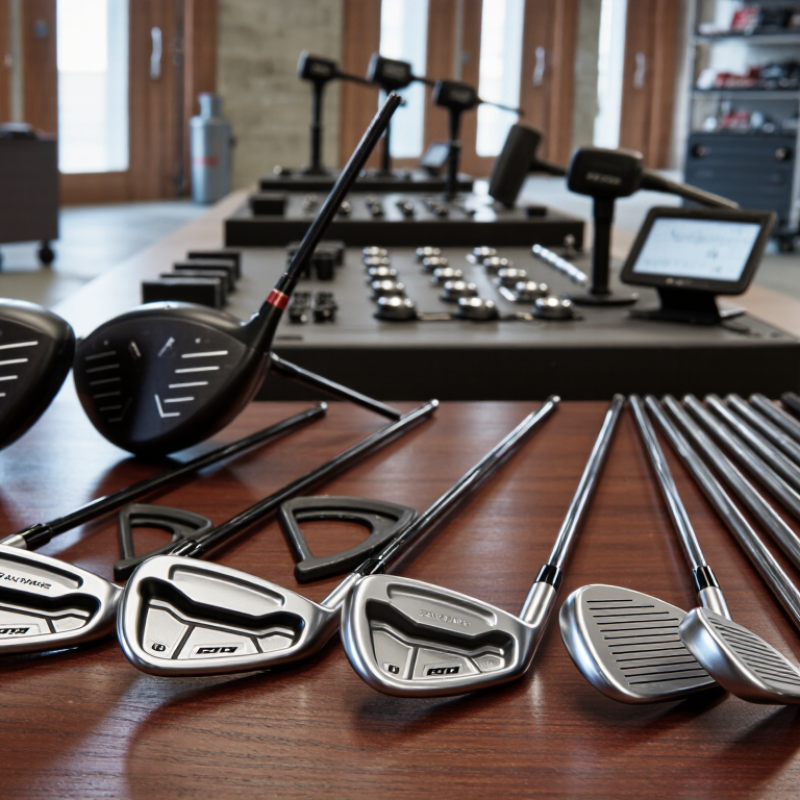
Understanding the China Golf Club Manufacturing Industry
China’s golf club manufacturing industry has developed from basic metal processing into a detailed, process-driven supply chain. Many factories now handle forging, casting, CNC milling, polishing, coating, and final assembly in one production network. This concentration can shorten lead times and reduce transport between stages.
When evaluating the top ten manufacturers, buyers should look beyond machinery lists. A reliable factory records clubhead weight, loft, lie angle, shaft alignment, and surface finish for each batch. Samples should be tested on launch monitors and checked with calibrated gauges. Small differences can change ball flight noticeably. That detail matters.
Factory experience also appears in communication. Engineers should explain tolerances, material choices, and tooling costs without hiding weak points. Production teams may offer prototypes before large orders, which helps identify vibration, balance, or grip problems early. Independent inspections add another layer of confidence, especially for overseas buyers.
The industry is not perfect. Some suppliers rely heavily on subcontractors, making quality less consistent across batches. A polished sample can also hide ordinary mass-production limits. Buyers need written specifications, inspection records, and clear correction procedures. Environmental controls, worker safety, and export documentation deserve equal attention. Price alone is a poor measure of manufacturing ability. The best comparison combines technical evidence, factory transparency, and practical testing under real playing conditions.
Key Criteria for Ranking Golf Club Manufacturers
China Top 10 Club Championship Golf Manufacturers?
A credible ranking should measure performance, not factory scale alone. The R&A’s 2024 Global Golf Participation Report recorded 66.6 million golfers across 206 countries in 2023. That wider market demands different club designs. Championship manufacturers should therefore show repeatable results for professionals, amateurs, and developing players.
Quality control comes first. Test reports should verify loft, lie, face thickness, center of gravity, and swing-weight consistency. Small variations can change launch by several degrees. Compliance matters too. The USGA and R&A equipment rules limit clubhead characteristics, including spring-like effect and dimensions. A serious manufacturer must document testing before products reach competition. Independent robot testing, player trials, and fitting data add stronger evidence than advertising claims.
Durability is another ranking factor. Golf Datatech’s equipment tracking reports consistently show strong consumer demand for replacement clubs, but sales volume does not prove long-term value. A top manufacturer should provide stable shafts, durable grooves, clear warranty terms, and accessible technical support. Service after purchase is often overlooked. That is a mistake. Product development also deserves weight, especially when materials improve energy transfer without reducing control. Environmental reporting can strengthen credibility, although public factory data remains incomplete in some supply chains. A ranking can still be imperfect. Player testing should be repeated across swing speeds, weather conditions, and handicap levels before final scores are assigned.
China’s Top 10 Golf Club Manufacturers
China’s top 10 golf club manufacturers are best judged by production quality, engineering depth, and consistent delivery. Many serve international markets through original equipment manufacturing and private-label programs. Their factories commonly combine precision forging, computer-controlled milling, polishing, and controlled assembly. A well-made iron should show clean grooves, balanced weight, and accurate loft and lie angles.
The strongest manufacturers usually maintain testing areas for swing feel, durability, and shaft performance. Some inspect every club head with digital measuring equipment. Others rely more heavily on sampling, which can create small differences between batches. That weakness matters. Golfers notice uneven grips, loose ferrules, or inconsistent face angles during practice. Reliable suppliers provide inspection records, material details, packaging standards, and clear production schedules. Factory experience also matters when a buyer requests custom sole widths, cavity designs, or finish treatments.
A serious comparison should examine ten manufacturers across steel casting, precision forging, titanium wood heads, wedges, and putters. It should also check worker training, equipment maintenance, and communication during revisions. Low pricing may look attractive, but rushed finishing often increases replacement costs. My assessment would remain partly provisional because factory capabilities can change quickly. Some workshops have excellent machinery but limited golf-specific testing experience. Others produce dependable clubs yet communicate technical details poorly. Samples, measurement reports, and small trial orders reveal more than impressive showroom photographs.
China’s Top 10 Golf Club Manufacturers
Typical loft specifications across major golf club categories used in commercial manufacturing
The figures represent common commercial loft specifications in degrees. Actual specifications vary by product series, target golfer, and manufacturer; this chart does not rank individual companies or brands.
Manufacturing Technologies and Product Specialties
China's top club championship golf manufacturers compete through process control, not decoration. Their factories commonly combine five-axis CNC milling, precision casting, and robotic polishing. Computer-aided design helps engineers adjust center of gravity, face thickness, and sole geometry. For forged irons, heated billets are pressed under controlled force, then milled and finished by hand. Casting supports complex cavity shapes and consistent batch production. Skilled inspectors check loft, lie, grooves, and surface hardness. Laser scanning can compare each head with the digital model within tight tolerances. This matters when a small angle change affects launch and turf interaction. Still, no process is perfect. Human judgment can expose marks that scanners miss.
Specialization separates serious suppliers from general metal workshops. Some focus on tour-style forged irons with compact heads and soft impact feedback. Others develop high-MOI woods using lightweight crowns, adjustable hosels, and carbon-composite panels. Wedge specialists tune sole grinds for firm links, wet parkland, or deep sand. Putters may use CNC faces, variable milling patterns, and tungsten weighting for stable alignment. Shaft assembly requires different controls, including frequency measurement, torque testing, and balanced grip installation. Quality teams often test samples through repeated impact cycles and climate chambers. Production data should remain traceable from raw billet to packed club. That sounds routine. It is not. A rushed inspection can undermine months of engineering. Buyers should request tolerance records, material certificates, sample testing, and clear correction procedures before approving a large order.
How to Select a Reliable Chinese Golf Club Manufacturer
Selecting a reliable Chinese golf club manufacturer requires more than comparing quotations. The R&A Global Golf Participation Report 2023 recorded approximately 66.6 million golfers worldwide. That expanding market increases pressure on factories to deliver consistent specifications, not merely attractive samples. Request production samples with measured loft, lie, shaft flex, swing weight, and face thickness. Compare five units from the same batch. Variation often appears there.
A dependable supplier should provide traceable material records, incoming inspection data, and final quality reports. Ask whether the factory follows ISO 9001:2015 procedures, but verify the certificate with the issuing body. The R&A Equipment Rules should guide conformity checks for club dimensions and performance. Independent testing is safer than relying on a factory spreadsheet. Small details matter. Check ferrule alignment, grip installation, paint adhesion, and serial-number traceability.
The World Bank Logistics Performance Index 2023 placed China 19th globally, with a score of 3.7 out of 5. This indicates strong logistics capability, but it does not prove factory reliability. Review export experience, production capacity, corrective-action records, and inspection access. A written agreement should define tolerances, packaging, delivery terms, and remedies for defects. Do not select only by price. My own bias is that a polished factory tour can feel persuasive, yet it may hide weak process control. Recheck everything.